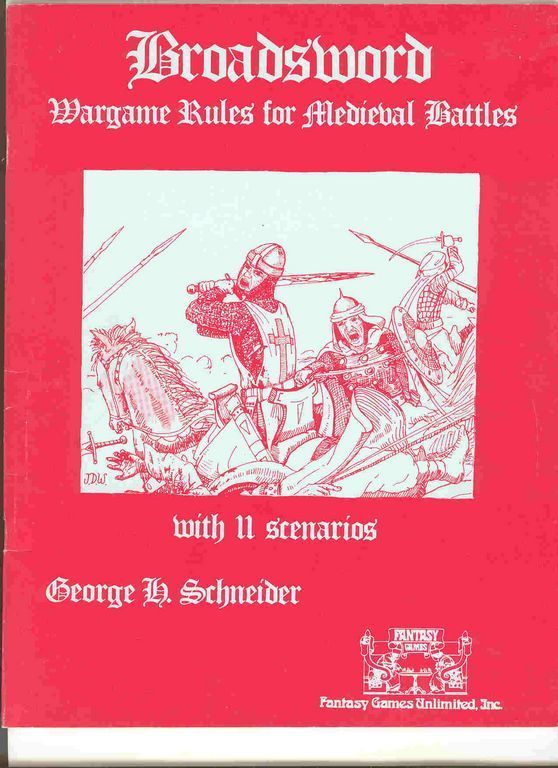
Broadsword 1977
Location
Sign in to see where your copy sits: the shelf, drawn, and how the box sits on it.
My Copy & Notes
My Prints for Broadsword
All 0 on LayerUpSign in to see the prints you marked Printed for this game, the insert in the box first.
Expansions & Promos
No expansions or promos on record for this game.
About the Game
Broadsword - Wargame rules for Medieval Battles - Minatures Rules
The rules are a spin—off from Royal Armies of the Hyborean Age (by Lin Carter and Scott Bizar) which embody a functional combination of systems that lead to a playable and accurate simulation of medieval warfare when played without magic
Medieval battles were set piece affairs usually leading to an uncontroversial decision. Opposing armies deployed in sight of each other, just beyond maximum missile range, and received the sacraments before the engagement began. When “infidels” fought against them, European Christians displayed a special fervor to conquer all before them. Ironically, there were occasions, such as the sack of Rome in 1084, when commanders dispensed with the sacraments owing to the mixed composition of their armies. Feudal cavalry was the dominant battle winning component for most armies in this period, but its success often relied upon a close sense of coordination with civic militia and archer units, or special elite mercenary men—at—arms who formed the base from which the attack sprang. When peasant levies were included in any army, they were placed where they could do the least harm to the enemy or their own allies.
Woods, marshes, rivers, rocky terrain, or ocean fronts sometimes covered an army’s flank as an anchor, but most battles took place in the open on a plain or in defense of a dominating height. Western armies rarely employed fancy turning maneuvers, and most battles between similar forces were resolved by direct brute force. Even so, the value of committing the last reserve for the ultimate decision was well appreciated. Islamic, Eurasian, and Byzantine armies, of course, applied much more sophisticated strategems, such as feigned retreats and sweeping double enfilades.
Filed Under
- Categories
- Mechanics
- BGG ratings
- 8
- BGG data
- refreshed Sep 6, 2026