
Railway Rivals 1973
Location
Sign in to see where your copy sits: the shelf, drawn, and how the box sits on it.
My Copy & Notes
My Prints for Railway Rivals
All 0 on LayerUpSign in to see the prints you marked Printed for this game, the insert in the box first.
Expansions & Promos
20 on record Railway Rivals Map RO: Romania
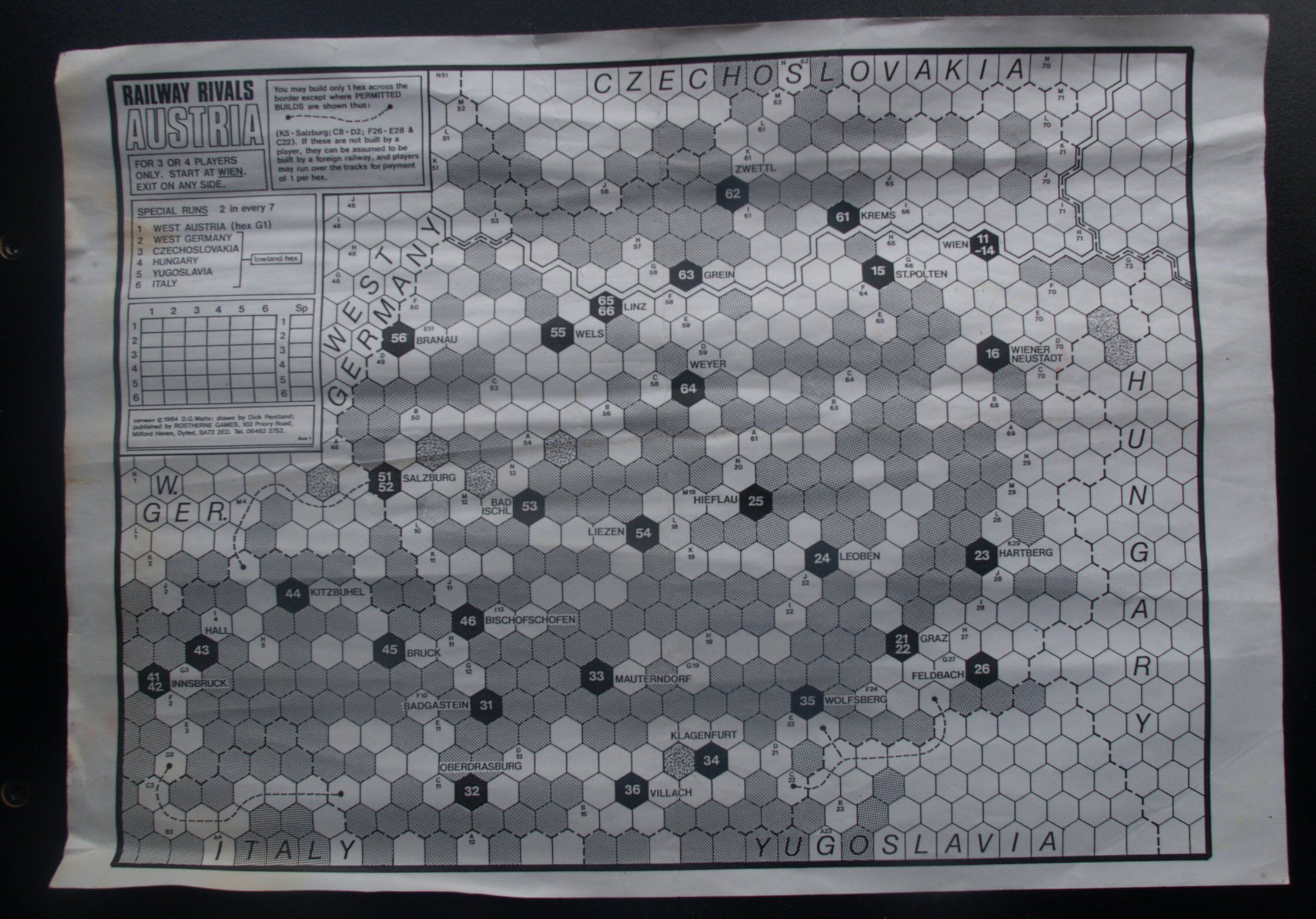 Railway Rivals Map AUS: Austria
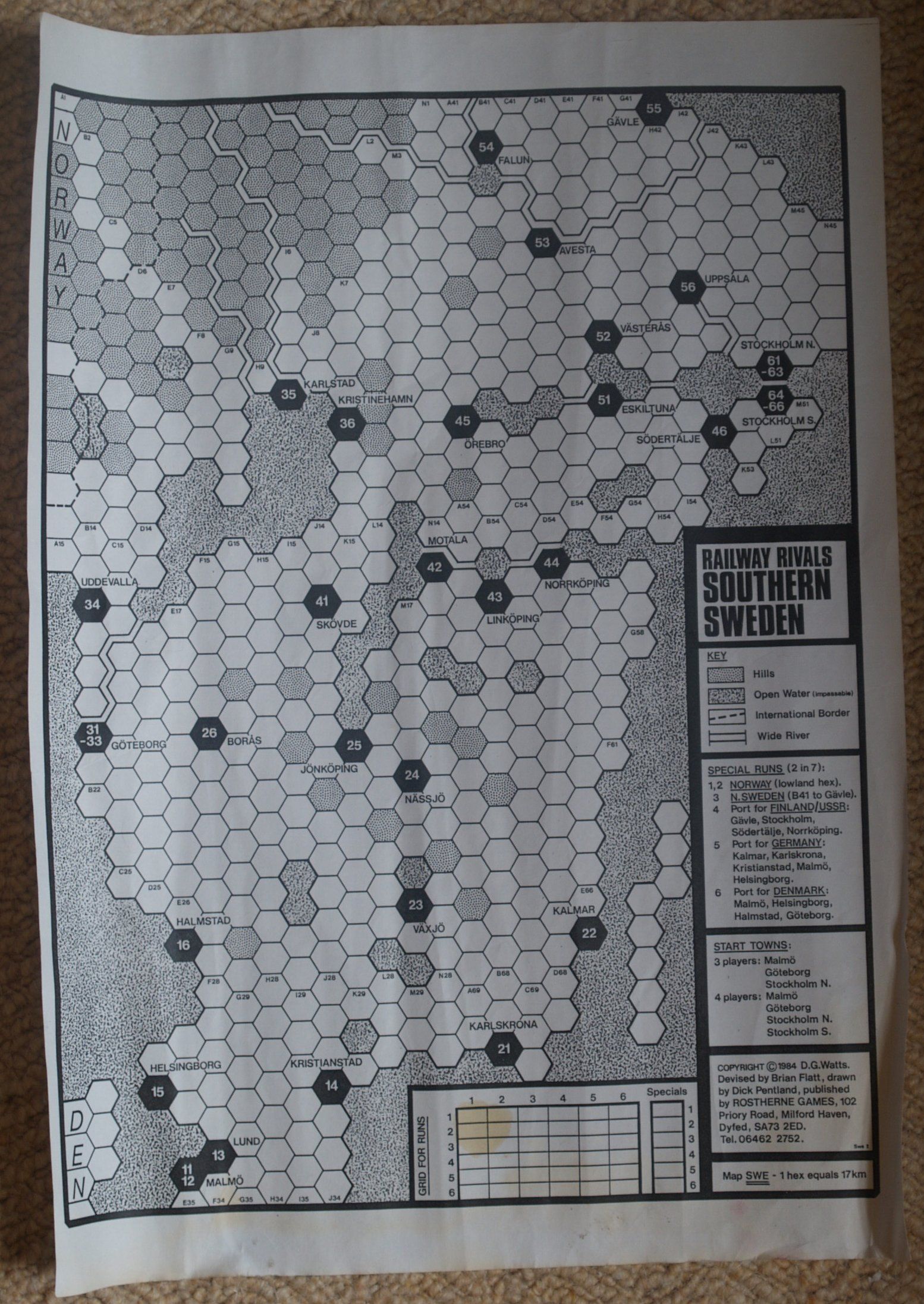 Railway Rivals Map SWE: Southern Sweden
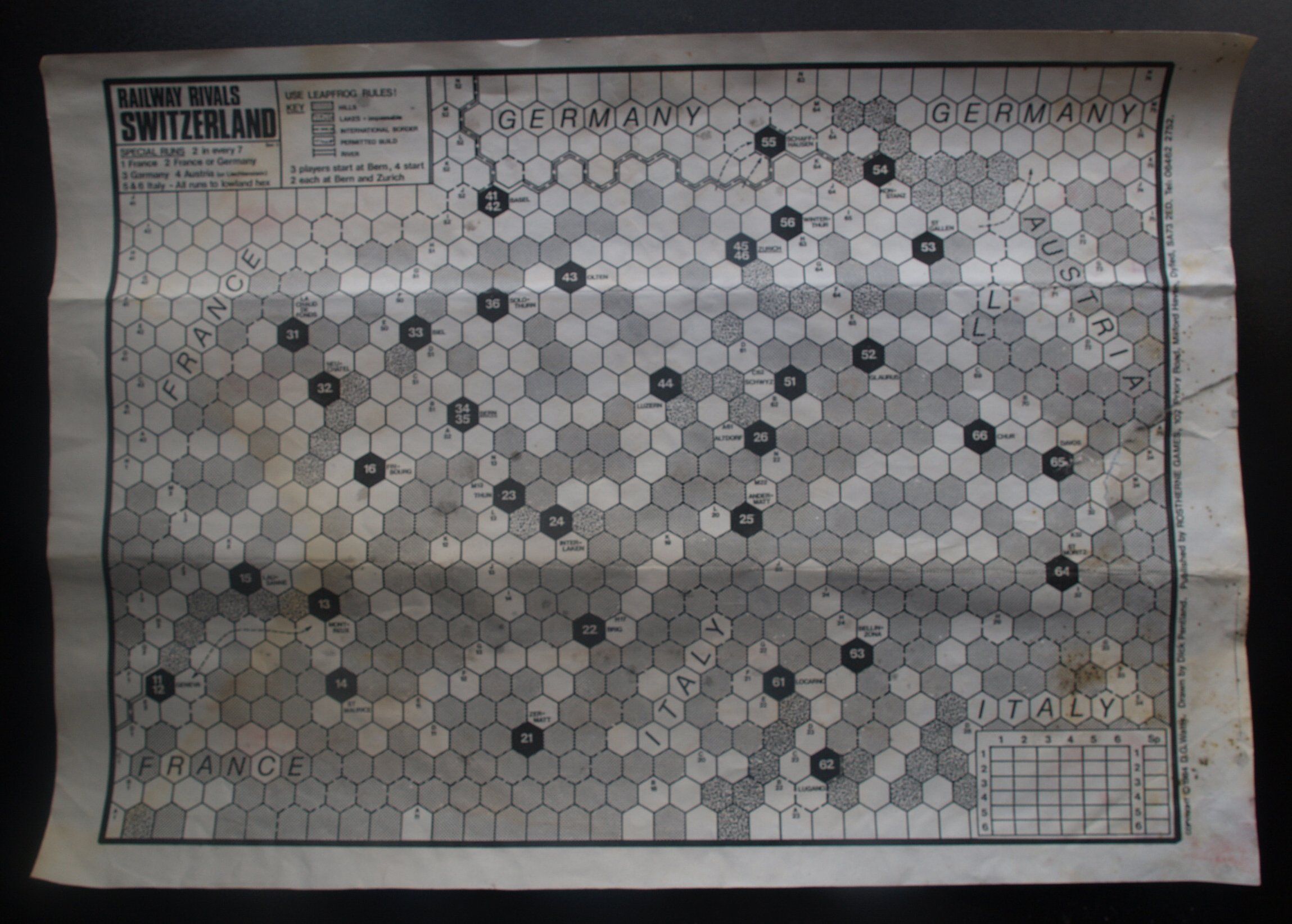 Railway Rivals Map SZ: Switzerland
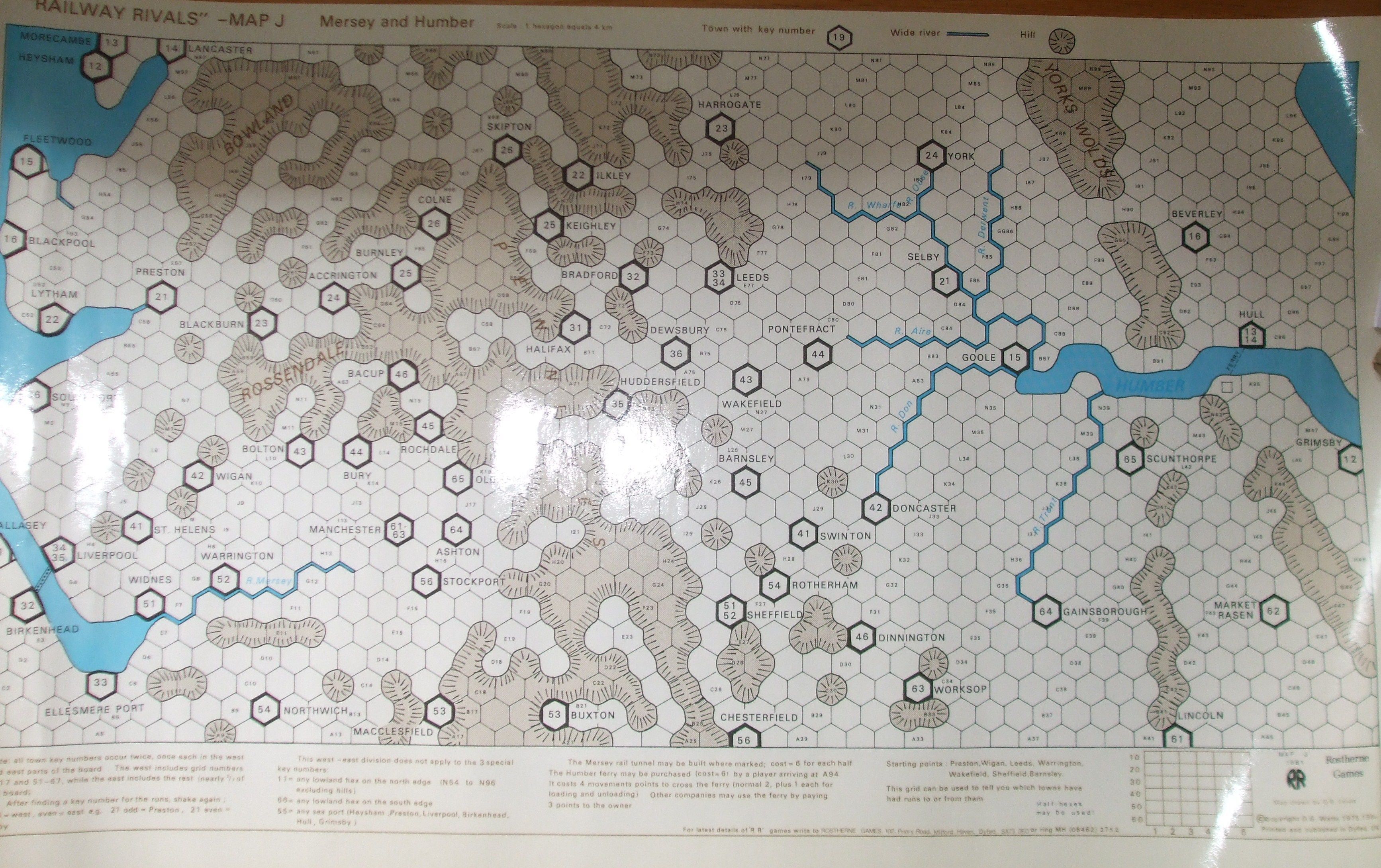 Railway Rivals Map J: Mersey & Humber
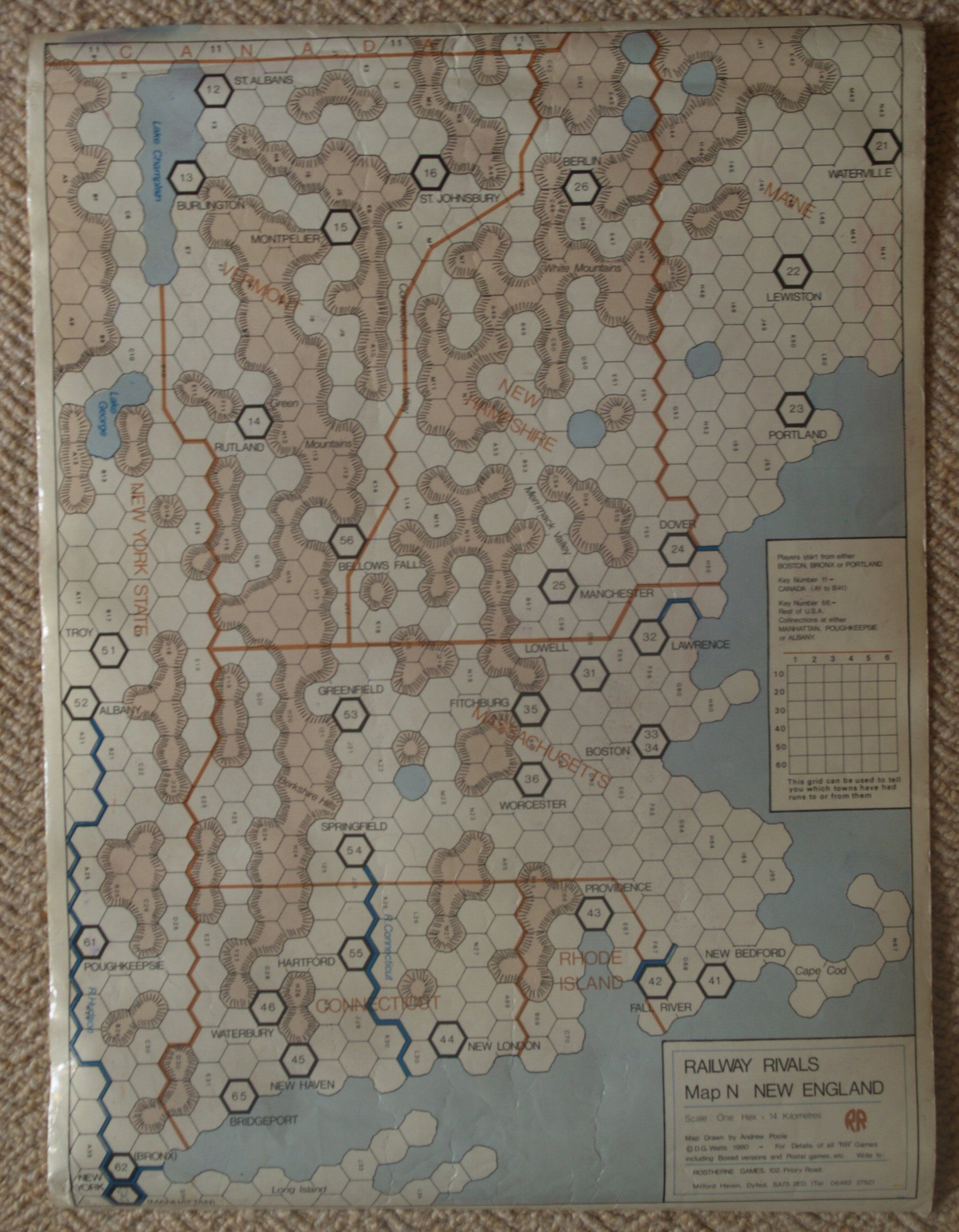 Railway Rivals Map N: New England
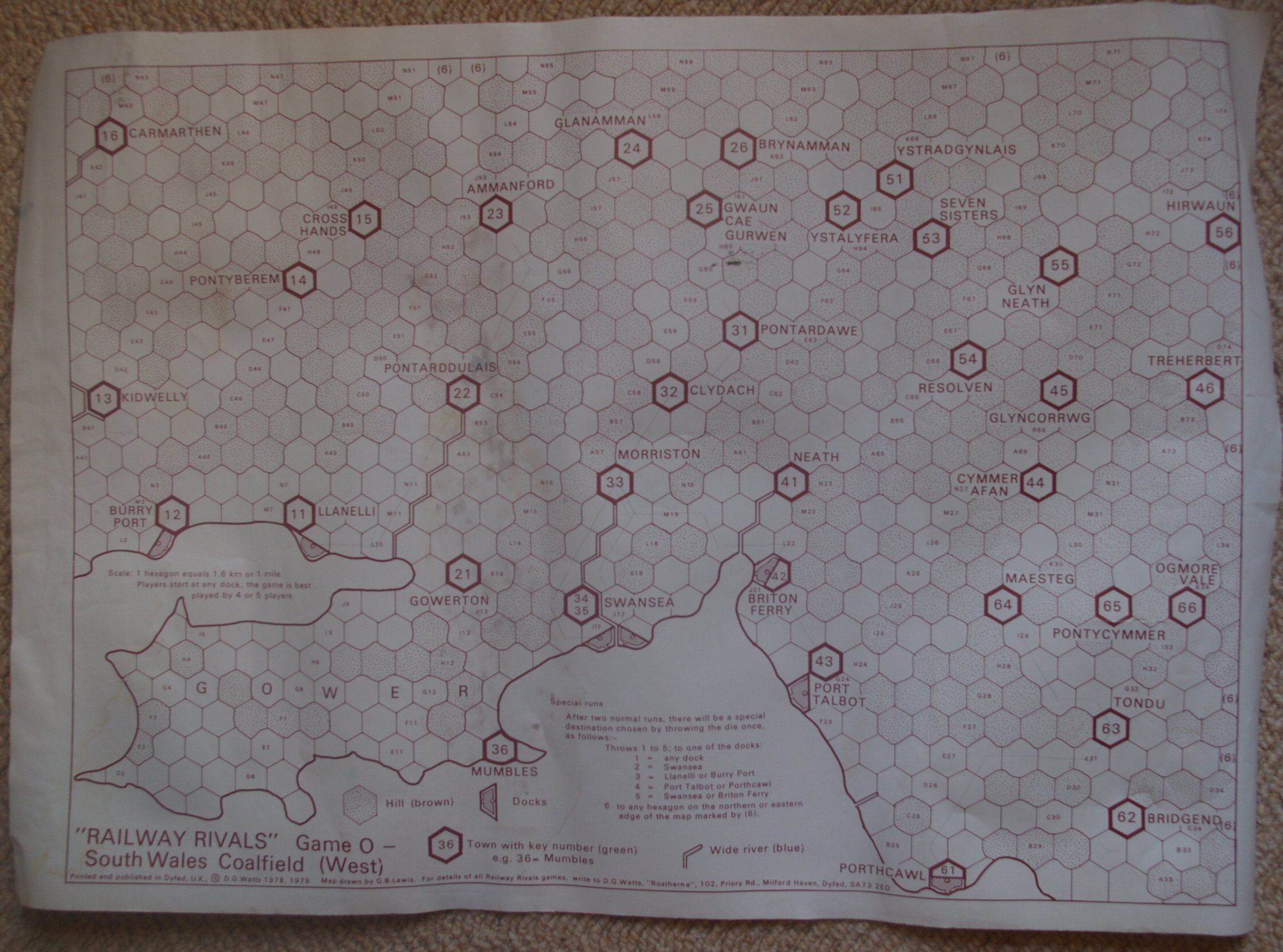 Railway Rivals Map O: South Wales Coalfield (West)
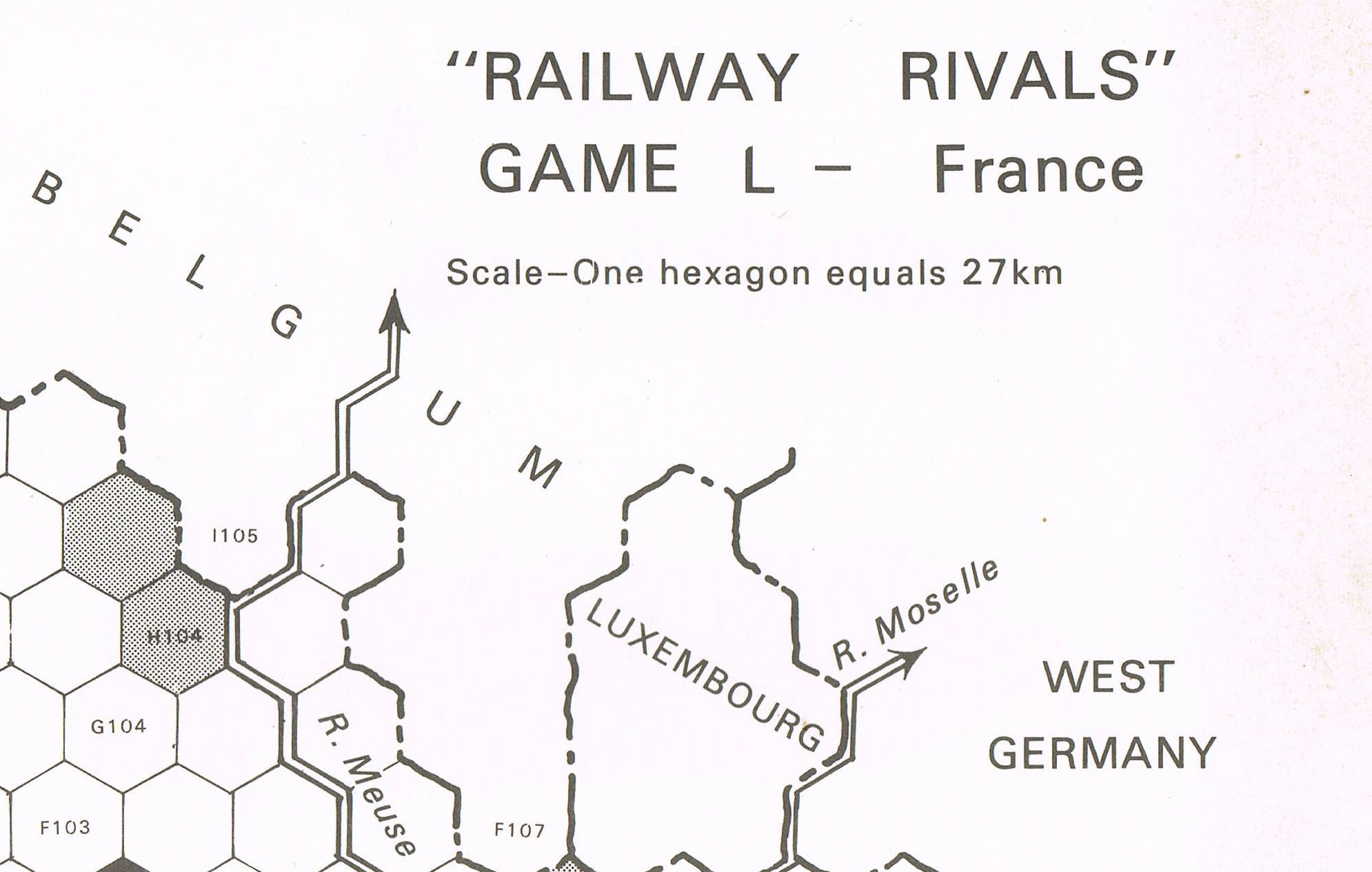 Railway Rivals Map L: France
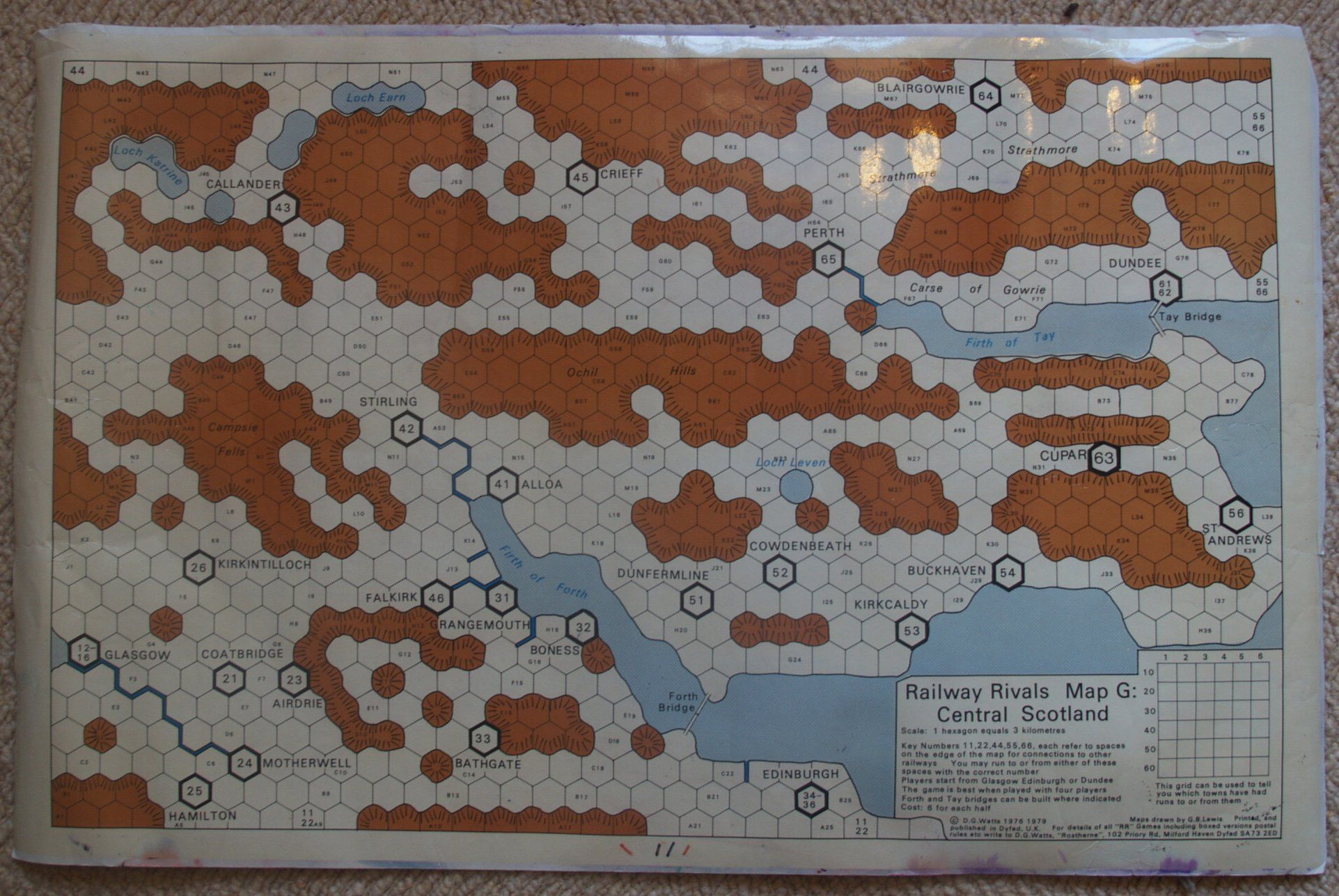 Railway Rivals Map G: Central Scotland
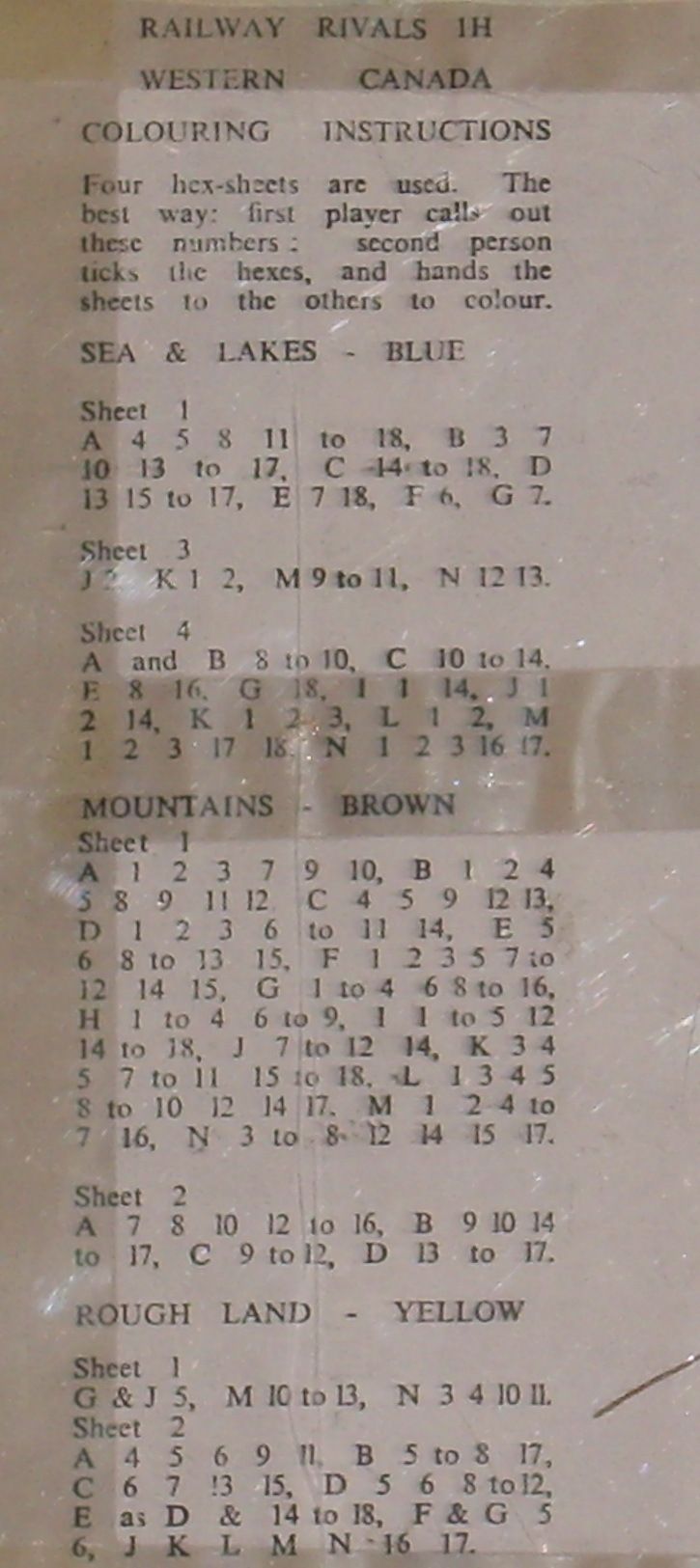 Railway Rivals Map H: Western Canada
 Railway Rivals Map IOW: Isle of Wight
 Railway Rivals Map F: South Scotland
 Railway Rivals Map A: South Wales Coalfield (East)
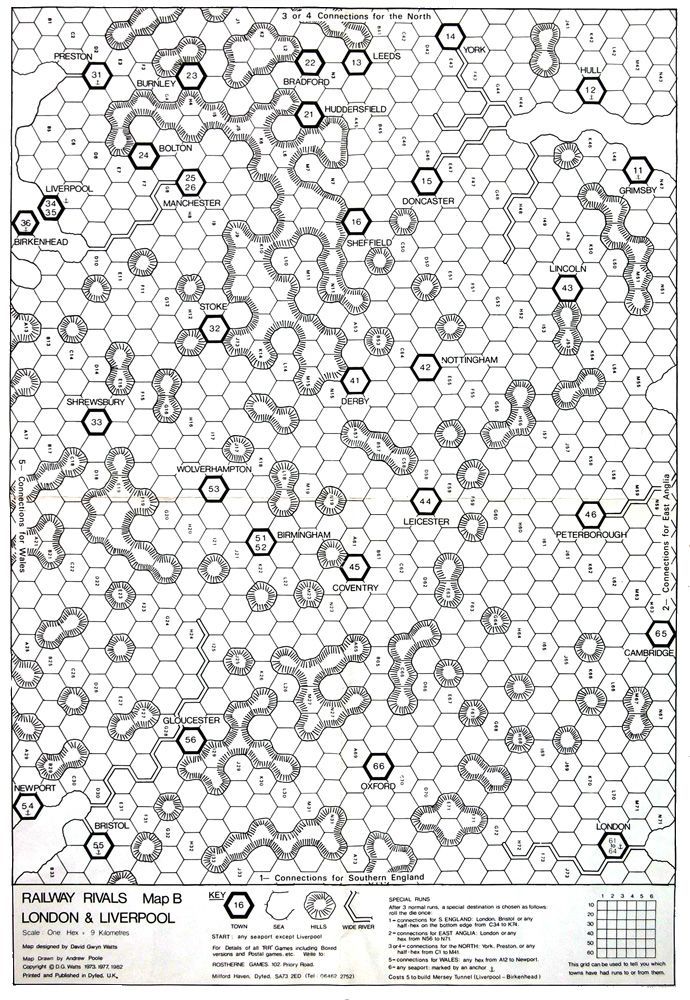 Railway Rivals Map B: London to Liverpool
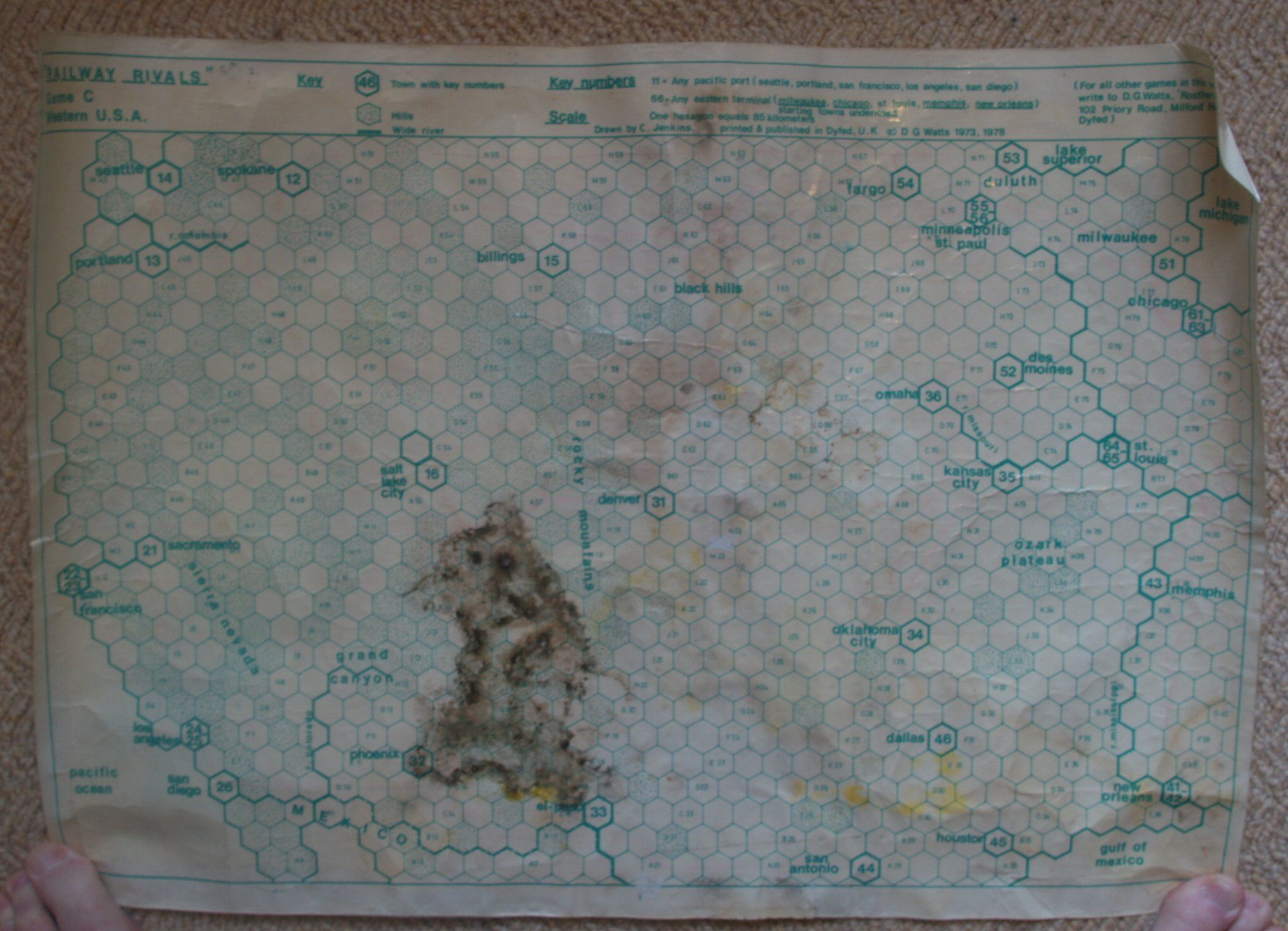 Railway Rivals Map C: Western USA
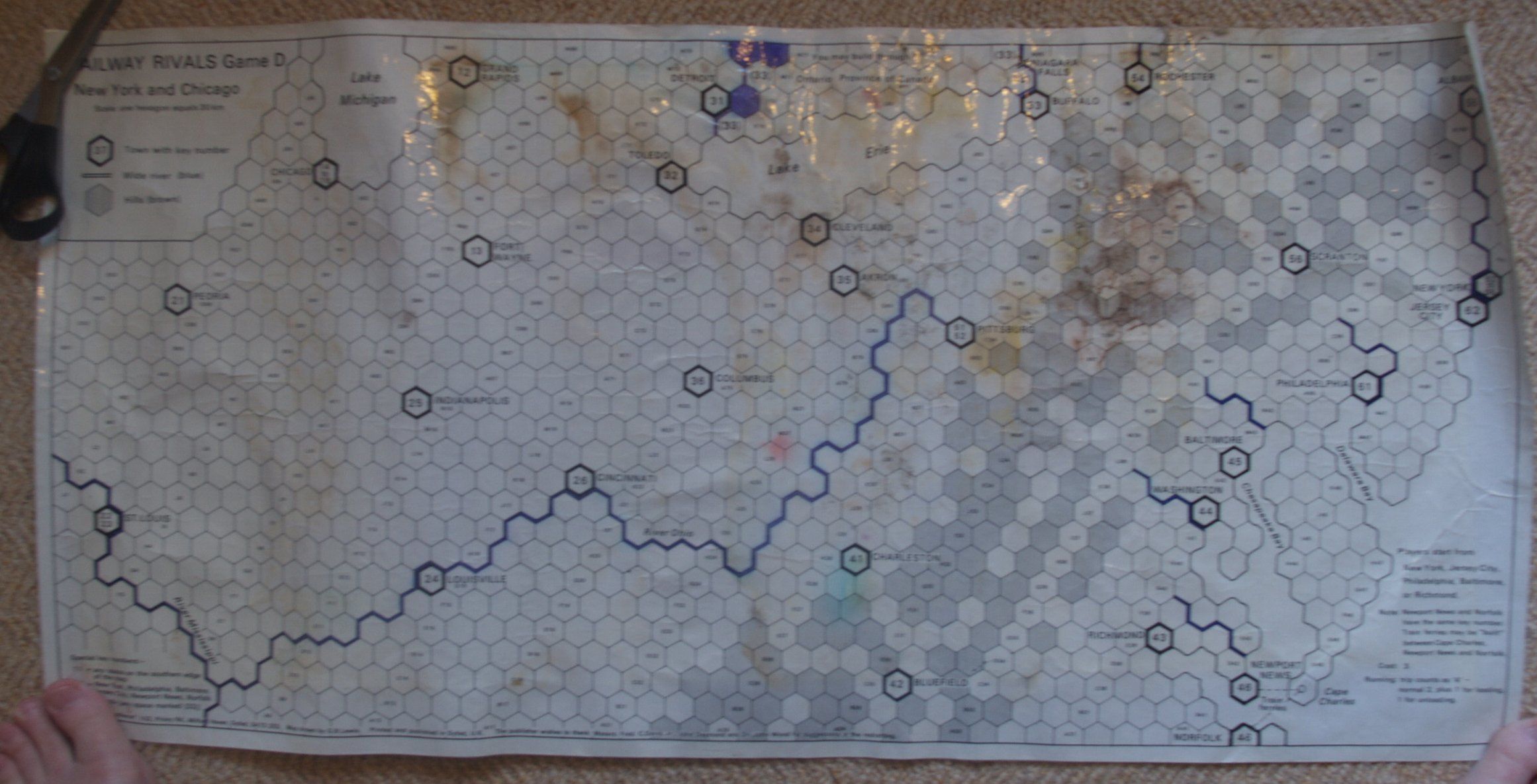 Railway Rivals Map D: New York and Chicago
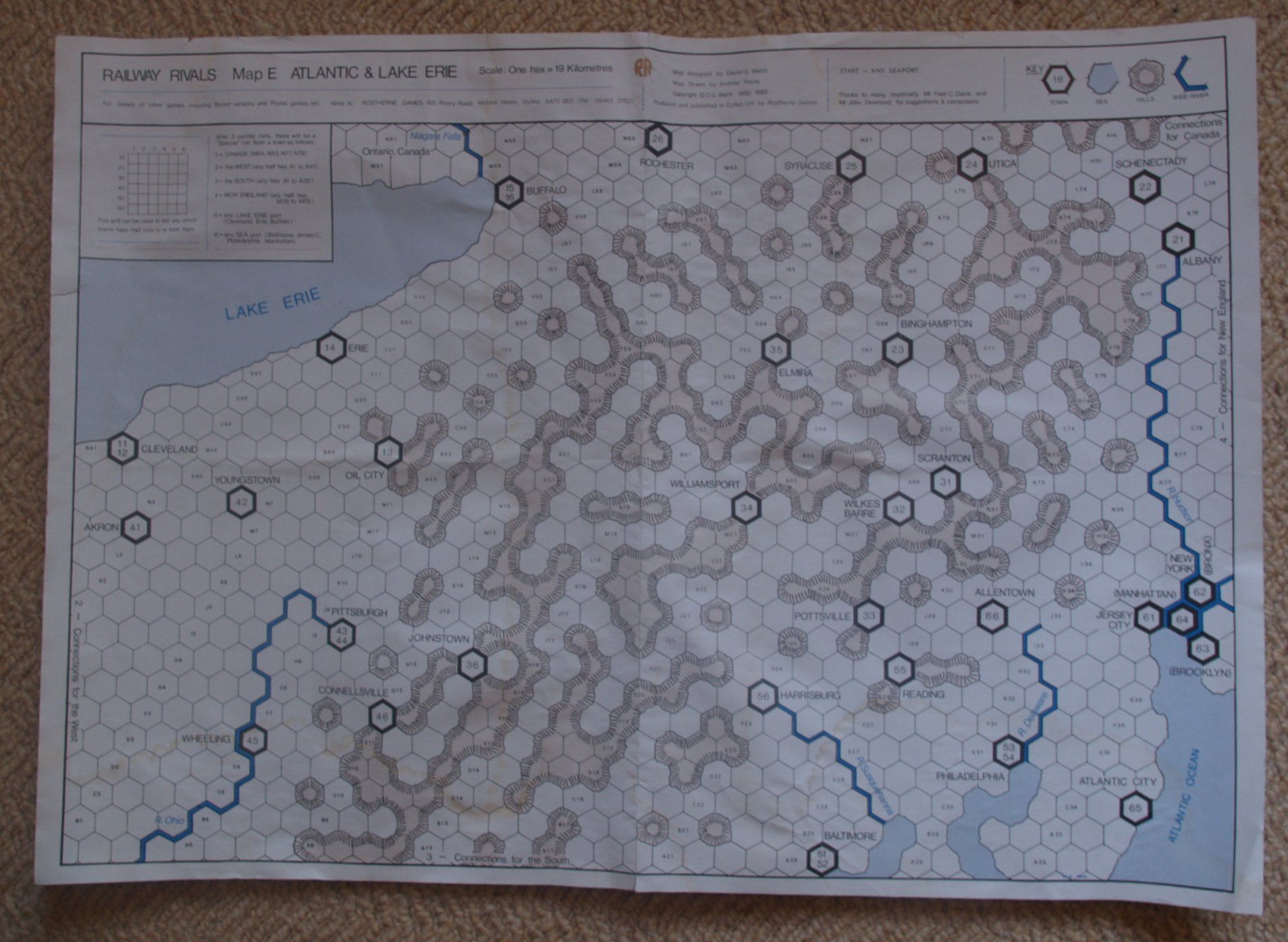 Railway Rivals Map E: Atlantic and Lake Erie
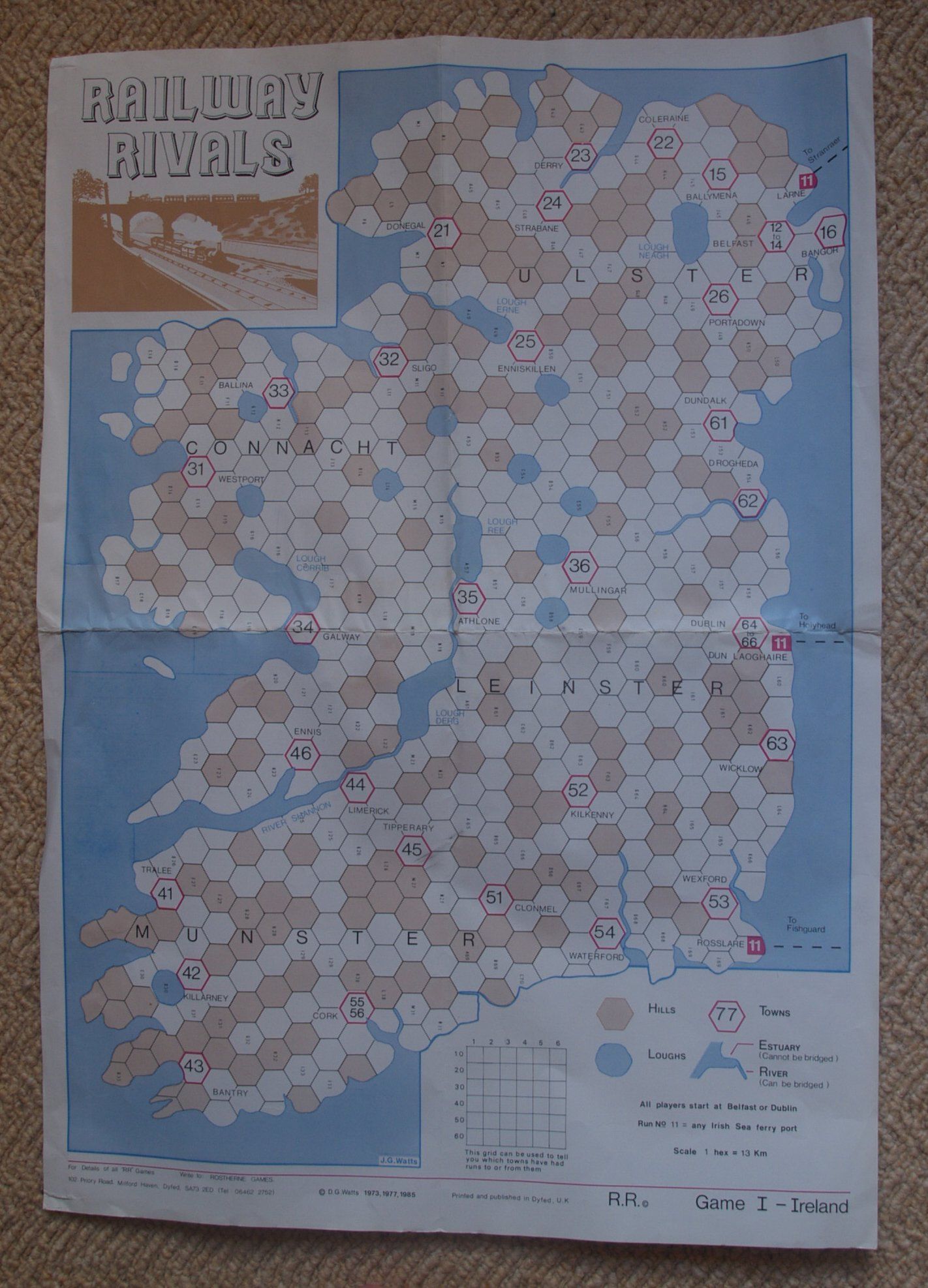 Railway Rivals Map I: Ireland
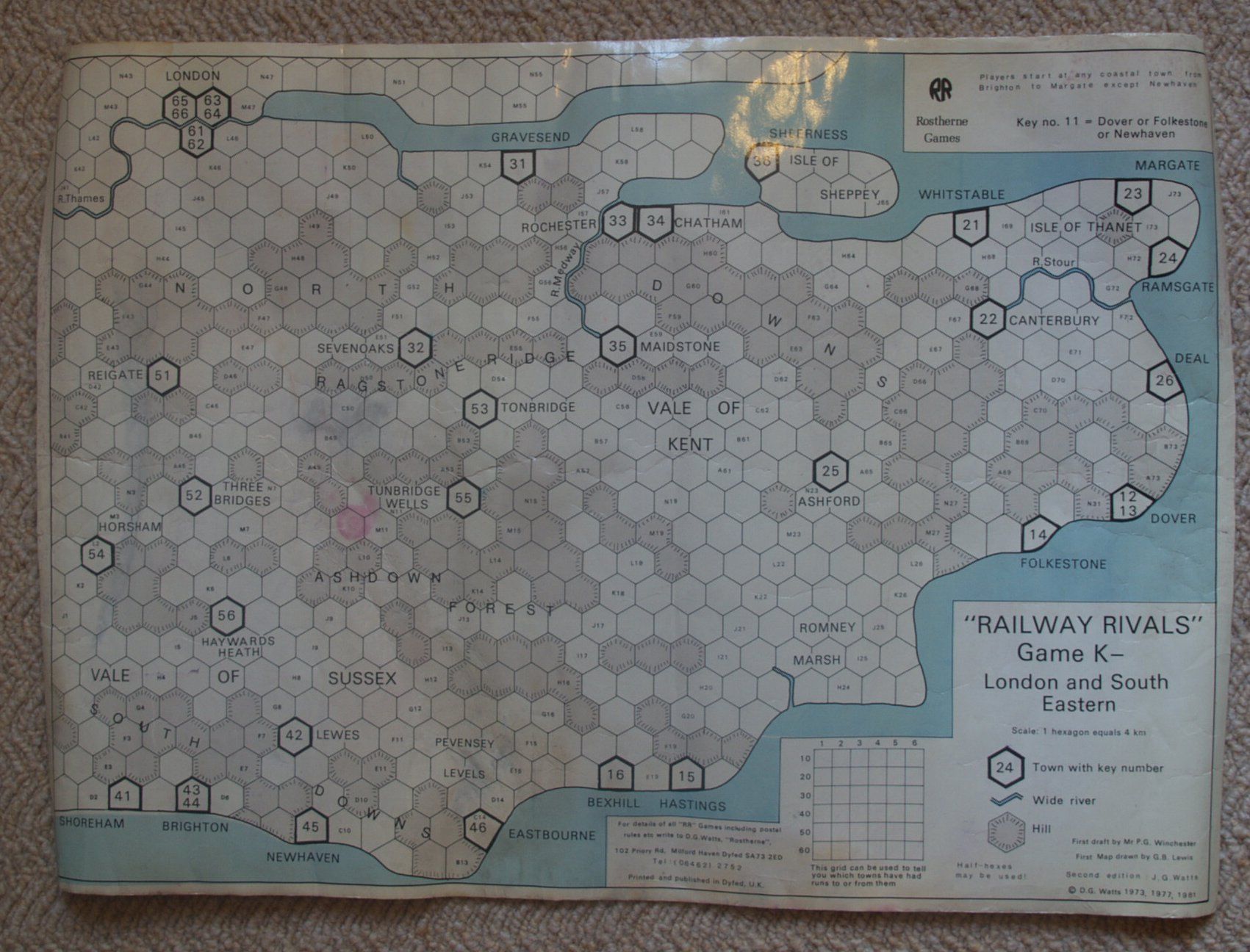 Railway Rivals Map K: London and South Eastern
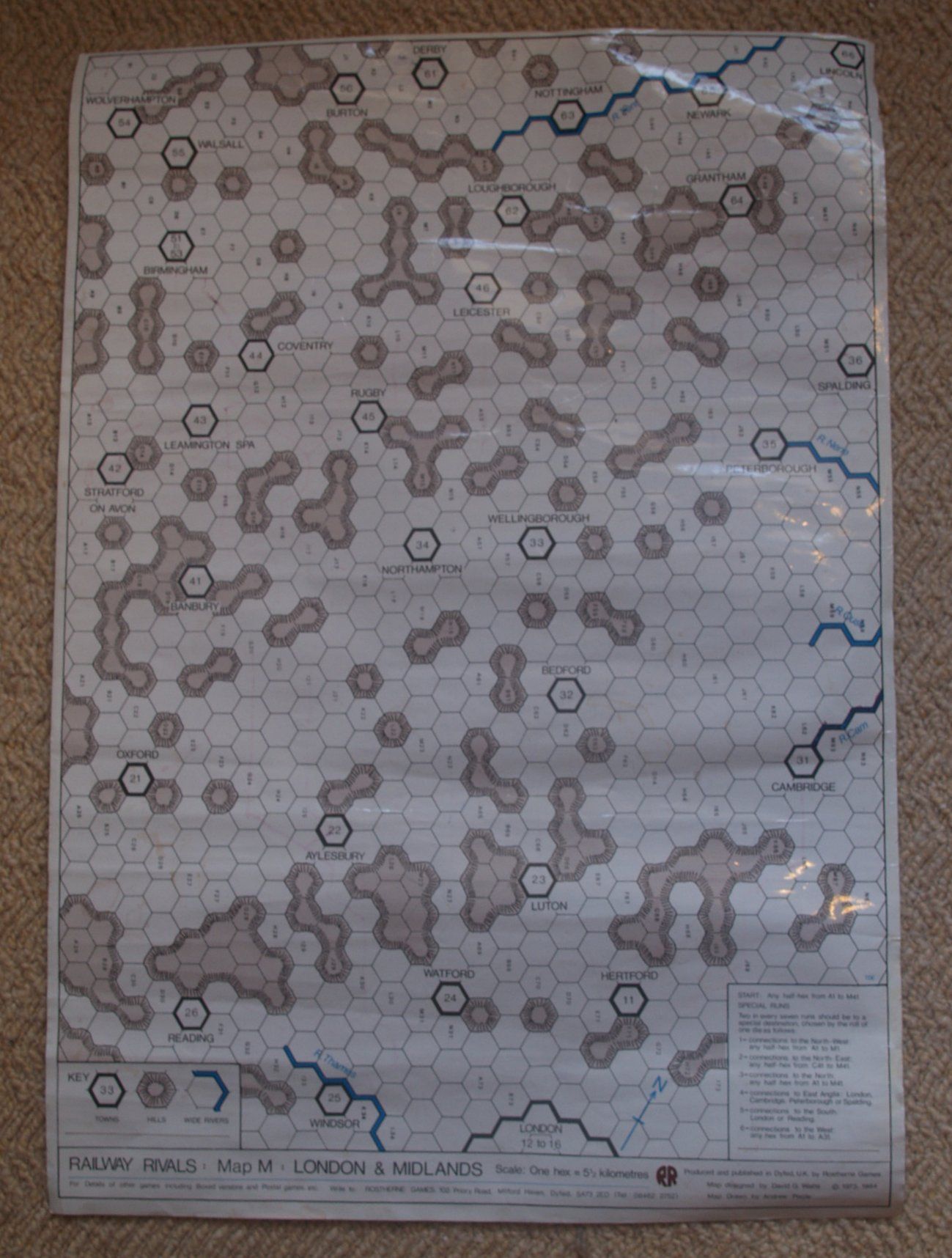 Railway Rivals Map M: London and the Midlands
About the Game
A classic simple railway racing game, perhaps the first modern railroading game, where you draw the railway lines on hex-board. This is the original version of the game, which went through several iterations before ultimately appearing as a boxed game as Railway Rivals and Dampfross. It was designed by David Watts, a Welsh geography teacher and train buff.
It was always intended first and foremost to be a good game to play, but David also wanted to use it for general education – explaining why railway lines were laid where they were, etc. The game is fundamentally straightforward – players build railway lines on a map (a tesselation of hexagons) with towns, rivers, hills, coastlines, etc. After a building phase there is then a racing phase – players race between randomly generated combinations of towns. Players with the most extensive efficient networks tend to win more races, and thus the game.
It always existed as 'just' a set of rules, with a number of official or unofficial maps available from various sources. The earliest and crudest manifestation was just a few (5 or 6) A4 hexagon sheets, and colouring instructions to make the maps up. When postal games players showed considerable enthusiasm for the game, David moved on to produce large size (slightly bigger than A2) hexagon sheets, also with colouring instructions. Later on the maps were printed in one colour on big maps, which you could colour highlight yourself, and cover with sticky-back plastic sheets, so that maps could be reused if water-based pens were used that could be washed off. Multicolour maps followed, which were later printed with a laminate covering.
The railways cost more if you go over mountains etc, but this gives you shorter routes. You can run parallel to other lines at a cost, or simply link into another player's track and rent the tracks of other players when you race.
The mechanics are very simple, and there is some luck involved with the random races that appear, and in racing. Nevertheless, the better players nearly always come out on top. Despite the apparent simplicity, there are plenty of opportunities for thoughtful play, especially with tactics such as blocking other players out of areas of the map.
Filed Under
- Categories
- Mechanics
- BGG ratings
- 20
- BGG data
- refreshed Jul 17, 2026