Log in to join the conversation.
Hnefatafl Board
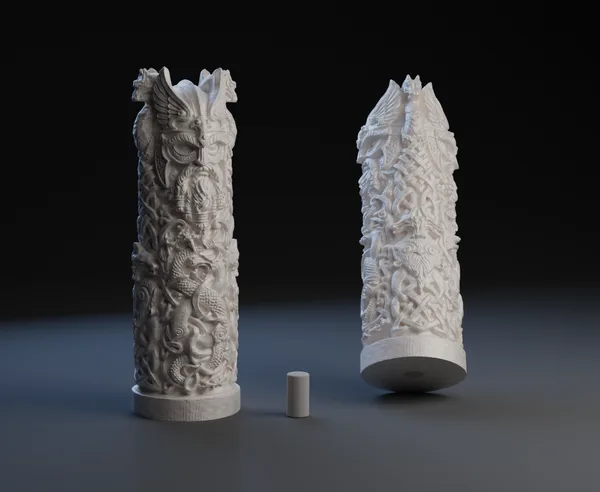
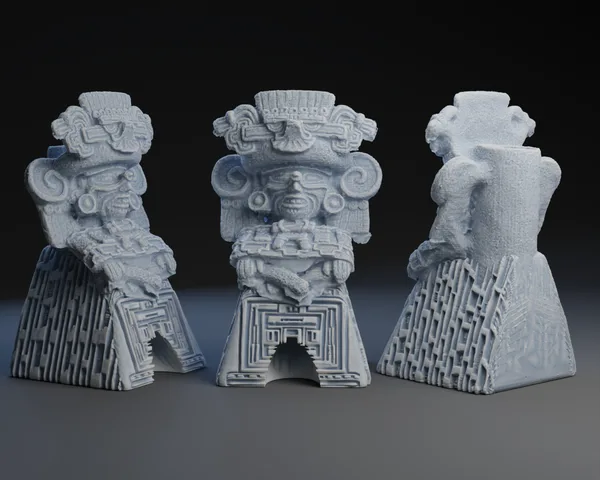
Still need to make the game pices... and pegs. (7/29/26)
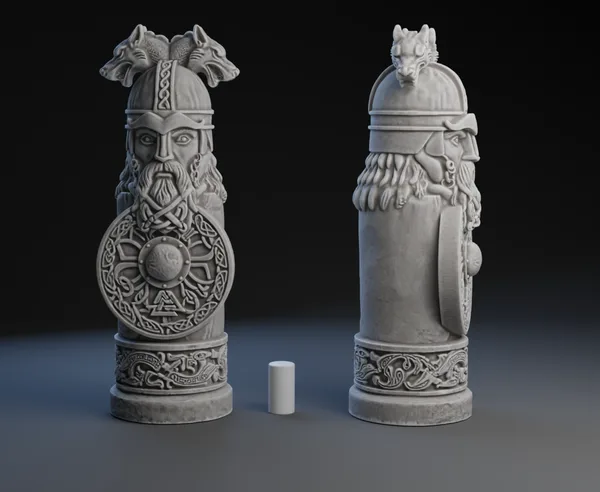
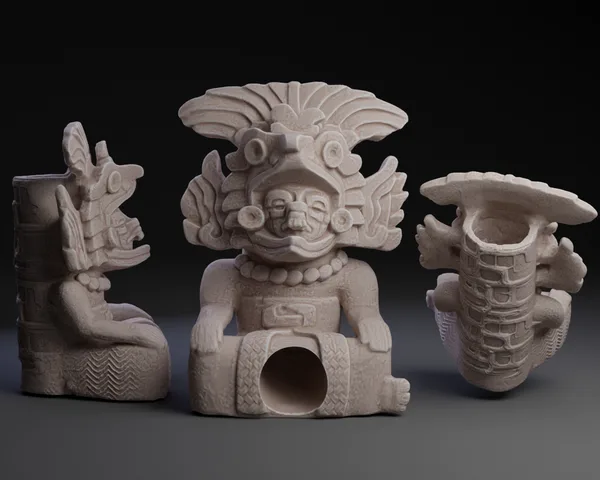
King Piece here :
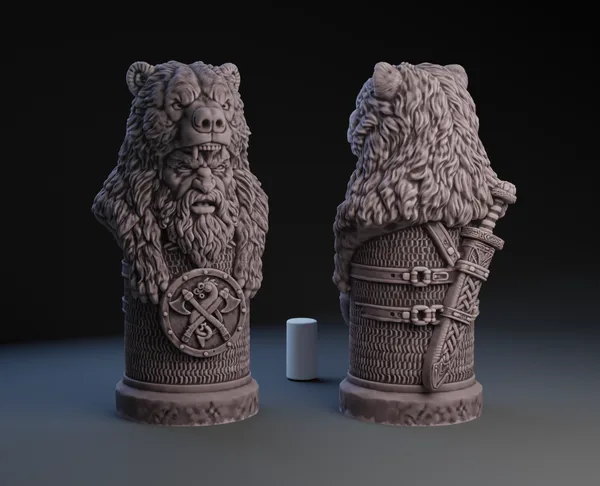
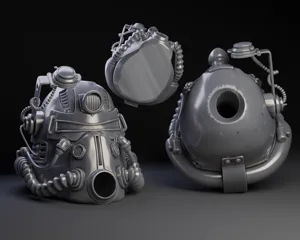
Defender Piece
(notes for myself) Pegs should be 2.7mm (diam) round to allow for .2 tolerance. Peg holes are also about 2.9mm deep. Originally boards like these were used on boats... so the pieces would not fall off the board at the boats rocked.
Hnefatafl (pronounced nef-ah-tah-fel ), often referred to as "Viking Chess," is an ancient Norse board game that was widely played across Scandinavia and the British Isles long before the introduction of modern chess. The name translates roughly to "King's Table" or "King's Board."
Historically, games like this were occasionally designed with pegged boards and pieces—exactly like the one you are making—so that Vikings could play them on ships in rough seas without the pieces sliding out of position.
Here is a breakdown of how the game works and why it is unique:
Unlike chess or checkers where both sides have equal forces and the same objective, Hnefatafl is fundamentally asymmetrical. It represents a siege or an ambush.
- The Defenders (The King's Guard): One player controls a small force positioned in the center of the board, guarding a King.
- The Attackers: The other player controls a much larger force (usually twice as many pieces) positioned along the four outer edges of the board.
Because the forces are uneven, the win conditions for each player are entirely different:
- To win as the King/Defenders: The King must escape the board by reaching one of the four corner squares (the "refuge" or "castle" squares).
- To win as the Attackers: The attackers must capture the King by surrounding him on all four sides (or pinning him against a corner or the center square).
While there are dozens of rule variations (since the original rules were passed down mostly by oral tradition and reconstructed later through historical texts), the core mechanics generally remain the same:
- Movement: Pieces move just like a Rook in chess. Any piece can move orthogonally (up, down, left, or right) across any number of empty squares. Pieces cannot move diagonally or jump over other pieces.
- The Center and Corners: The center square (the Throne ) and the four corner squares are typically restricted. Only the King may land on these squares, though in many variations, regular pieces can pass over the center square if it is empty.
- Custodian Capture: You do not capture an enemy piece by landing on its square. Instead, you capture a piece by sandwiching it between two of your own pieces on a horizontal or vertical line.
Hnefatafl was massively popular during the Viking Age (roughly 793–1066 AD). However, around the 11th and 12th centuries, traditional Chess was introduced to Scandinavia through trade routes. Chess eventually eclipsed Hnefatafl in popularity, and the rules of the Tafl games were nearly lost to history.
The game was ultimately reconstructed in modern times thanks to a Swedish botanist named Carl Linnaeus, who documented a localized surviving variation of the game (called Tablut ) while traveling with the Sámi people in Lapland in 1732.