Log in to join the conversation.
Mahjong / TCG Card Holder (under-mat style)
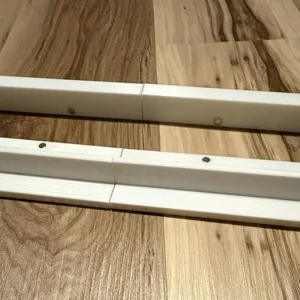
This is a folding card holder that allows a player to slide the edge under a mat and fold down the card rack to hold their cards. It could also double as a TCG card holder, though the width may need to be adjusted according to how many cards it needs to hold. Prints in place on a single plate.
Due to many requested revisions, I have updated file names and created a clean set up files.
File Naming Conventions:
NoSupport: This was the original hinge design which requires no supports, but does not fold in half for compact storage. It prints flat and folds down for use.
FlatFold: This hinge design DOES require supports, but is able to fold backwards in half for compact storage and has a natural stop point when opening for use.
256: This designates a model designed specifically for printing on a 256mm build plate (recently updated to fit without impeding the exclusion zone of some printers).
Updated: All current files are designated as “Updated” which indicates they include the highly requested V-style lip and tapered arms to be less obstructive under the playing mat.
Scalloped: Side edges are scalloped (wavy cut... because it's "cute"?)
- CardHolder_NoSupport_Updated
- CardHolder_NoSupport_Updated_256
- CardHolder_FlatFold_Updated
- CardHolder_FlatFold_Updated_256
- CardHolder_FlatFold_Updated_Scalloped
- CardHolder_FlatFold_Updated_256_Scalloped
Features added per request:
* Steeper ridge/lip angle (45 degrees)
* Tapered arms for thinner "under mat" portion (3mm to 2mm)
* 256mm model for printing on smaller printers
* Scalloped Edges for a prettier appearance
NOTE:
Print-In-Place models require tight tolerances (.2mm for this model). You must have a well-calibrated printer to print this type of model. This also means that you will need to use a layer height .2mm or smaller, and a .4 or smaller nozzle is recommended.
You will need to use an infill % that is high (75%+) either for the entire print (easier) or using a height modifier to include the top 2-3 layers of the flat surface as well as the entire hinges.
PETG is preferable for this model, but I have tested successfully in PLA+ as well.