Log in to join the conversation.
Reversi / Othello Boardgame
Print Profile (3) 0.28mm layer, 2 walls, 15% infill 8h 25m 252 g PLA
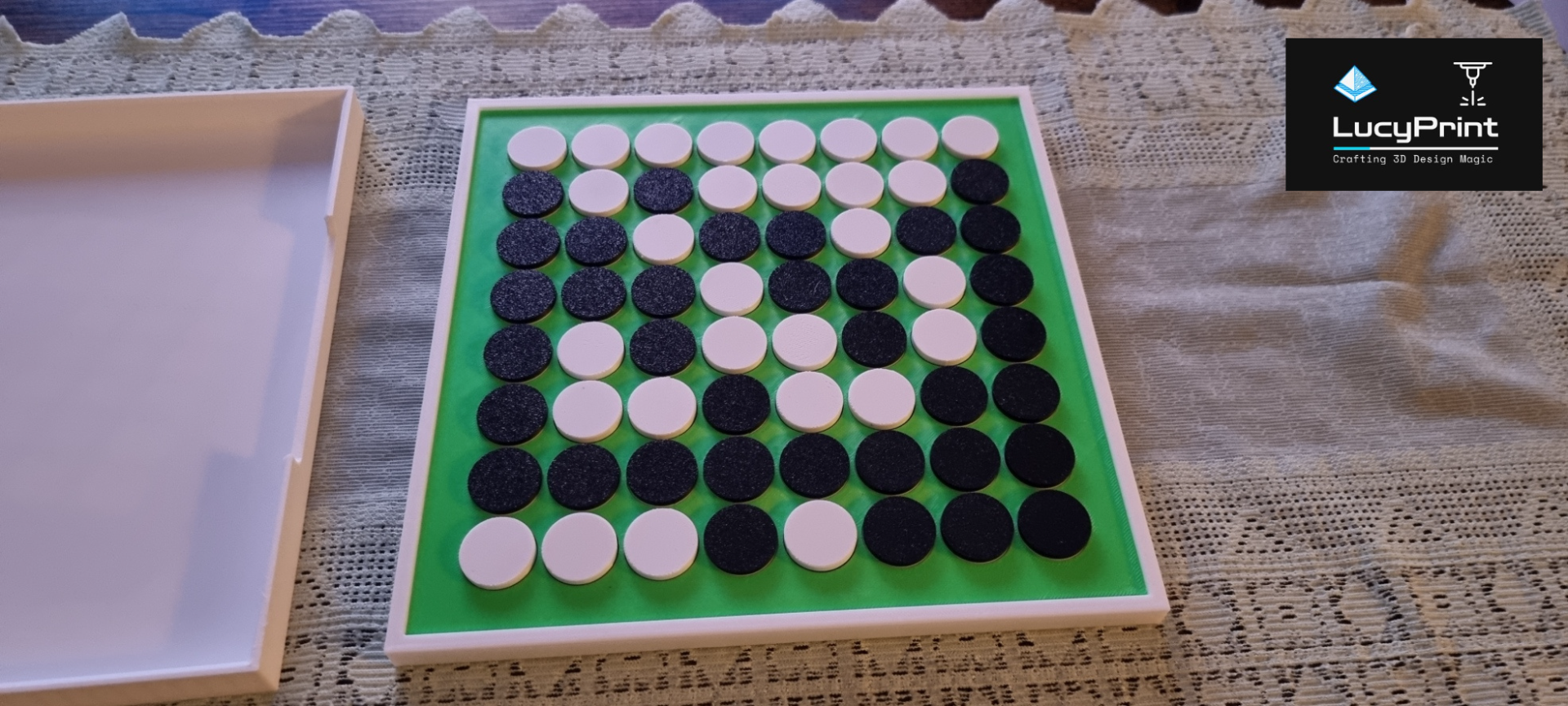
Plate Details (3)

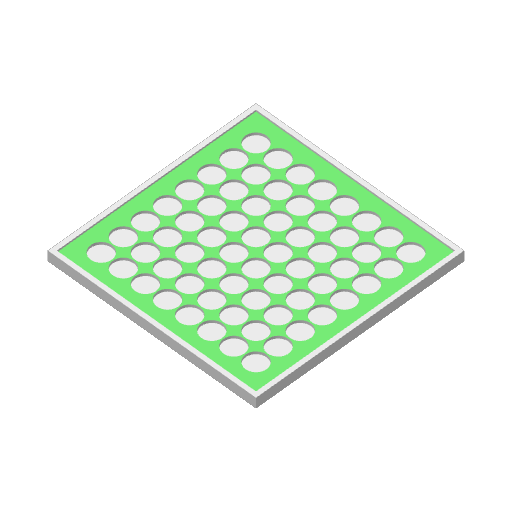

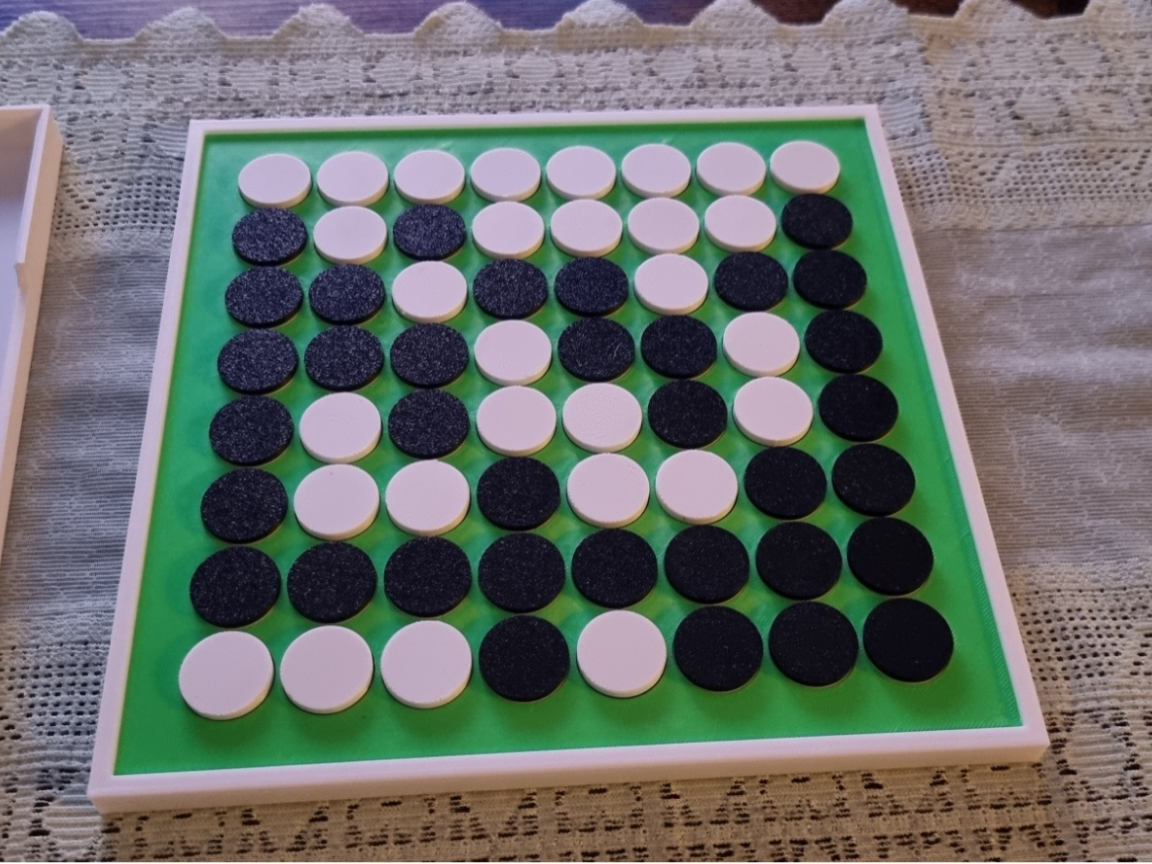
Plate Details (3)
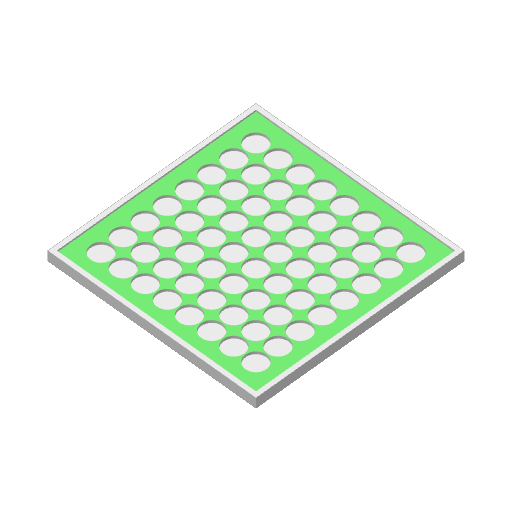


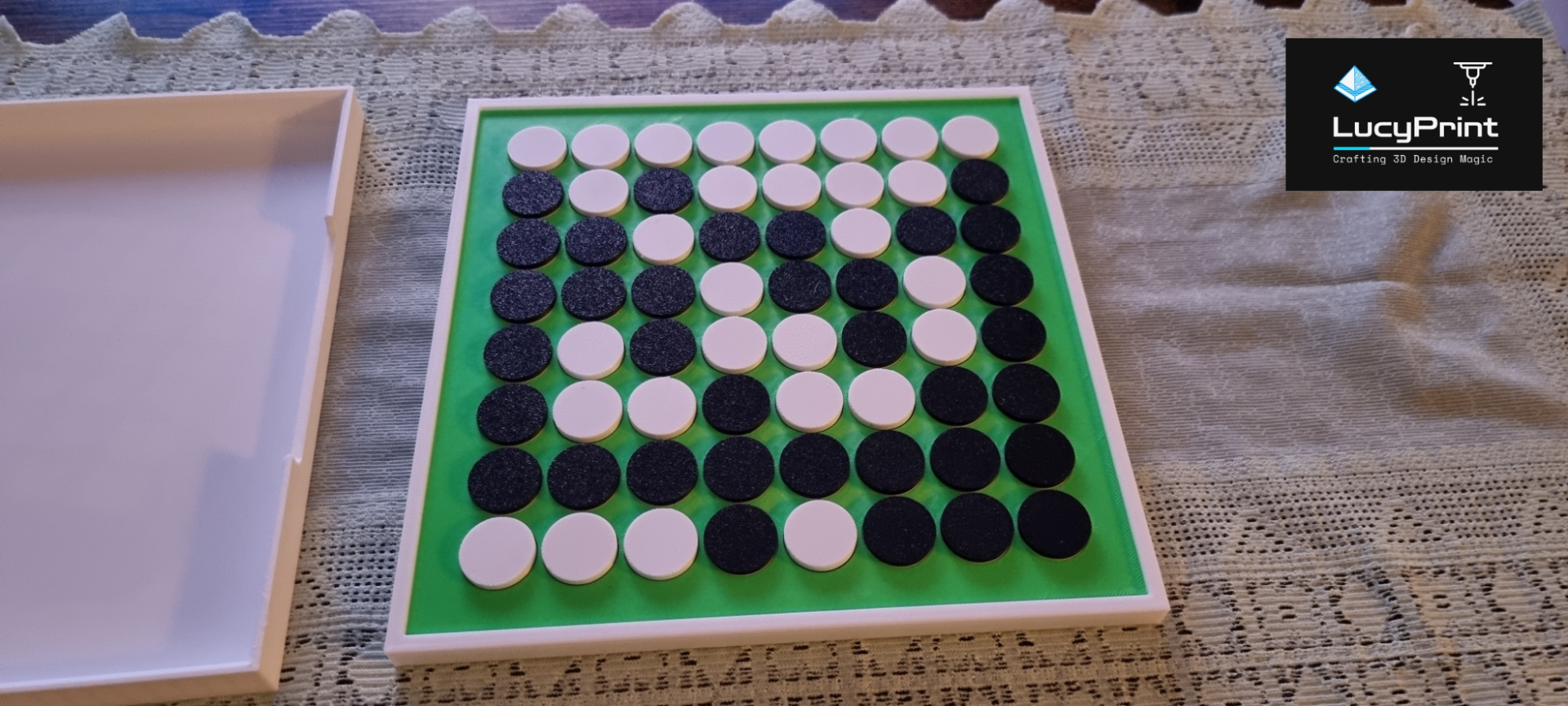
Plate Details (3)
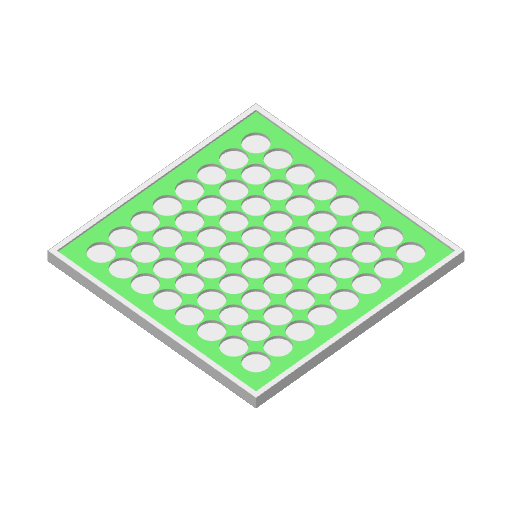


Reversi / Othello Brettspiel von LucyPrint
On an 8×8 board, the players take it in turns to place pieces with different coloured sides (black and white). One player (‘White’) always places their piece with the white side facing up, the other (‘Black’) with the black side. At the start of the game, there are four pieces in a predetermined arrangement on the board. A player must place their piece on an empty square that is horizontally, vertically or diagonally adjacent to a square that is already occupied. If a piece is placed, all opposing pieces between the new piece and an already placed piece of the player's own colour are turned over. Moves that do not result in any of the opponent's pieces being turned over are not permitted. The aim of the game is to end up with as many pieces of your own colour on the board as possible.
The exact rules:
Starting position
The game is played on a board with 8×8 squares.
In the Reversi variant, each player starts with a supply of 32 pieces; in Othello, the number of pieces is unlimited.
Only applies to the Othello variant: Before the game starts, two white and two black pieces are placed on the middle squares of the board, two diagonally opposite each other in the same colour (picture).
This only applies to the Reversi variant (Jacques and Sons): In the first two moves, both players place one of their pieces (red or black) on each of the four centre squares. This can result in two different ‘starting positions’.
Only applies to the Reversi variant (Ravensburger): On the first turn, both players each place two of their pieces (colours depending on the edition, e.g. red and green, white and red, red and yellow) on the four middle squares. This can result in two different ‘starting line-ups’, whereby the first player can de facto choose these.
The players take it in turns to move, with black going first (Jacques and Sons: red). You either place a piece with your own colour facing upwards on an empty square, or you pass. However, passing is only allowed if there is no way to place a checker in accordance with the rules.
You may only place in such a way that, starting from the piece you have placed, one or more of your opponent's pieces are adjacent in any direction (vertically, horizontally or diagonally), followed by one of your own pieces. This means that at least one of your opponent's pieces must be enclosed by the piece you have placed and another of your own pieces in a straight line. All squares between the two own pieces must be occupied by opposing pieces.
All opposing pieces that are enclosed in this way change colour by being turned over. This is done as part of the same turn before the opponent takes his turn. A move can include several rows of opposing pieces at the same time, all of which are then turned over. However, if a stone that has just been turned over includes other opposing stones, these are not turned over.
If the players pass immediately one after the other, i.e. if no one can place another checker, the game is over. In Reversi, this is the case when both players either have no more checkers or can no longer turn over any of their opponent's checkers.
The player who has the most pieces of their colour on the board at the end wins. If both players have the same number, the game is a draw.
There are various rules for determining the amount of winnings. In most cases, the squares that are still empty at the end of the game are credited to the winner, i.e. added to the difference in the number of pieces.
An additional rule, which is often used in Japanese tournaments, can be used to avoid a draw: One player (who is drawn by lot, for example) determines whether an equal number of stones at the end of the game is counted as a win for White or for Black. The other player then chooses a colour.
Pragmatic rules for games without computer support:
Once a piece has been placed, it may not be removed from the board.
If a player has wrongly turned over a piece or forgotten to turn one over, this can be corrected by both players until the opponent has made his next move. After that, incorrectly turned or not turned over pieces remain on the board.
Video →